International School vs Public School in Malaysia (2025 Guide)
October 3, 2025

Key Takeaways
- Cost Reality: Public schools seem cheaper but hidden costs (tuition, enrichment) can reach RM 15,000-25,000 annually
- Global Recognition: Cambridge qualifications provide direct access to UK, US, Australian universities plus Malaysian institutions
- Class Sizes Matter: International schools' smaller classes (15-25 students) enable personalised attention impossible in public schools (35-45 students)
- University Success: International school students achieve higher acceptance rates at top global universities through structured guidance programmes
- Future Flexibility: English-medium education and multicultural exposure prepare students for increasingly globalised career opportunities
Introduction
In 2025, Malaysian parents face a crucial educational decision: choosing between public schools and international schools. With Malaysia's economy becoming increasingly globalised and university competition intensifying, this choice has never been more important. Public schools offer affordable national curriculum education, whilst international schools provide globally recognised programmes such as Cambridge IGCSE and A-Levels that prepare students for universities worldwide. Parents in Johor Bahru and across Malaysia are asking: Which educational pathway truly prepares my child for success? This guide examines the real differences between these school systems, covering costs, curriculum outcomes, and long-term value. At Crescendo-HELP International School (CHIS), our Primary Curriculum and Secondary Curriculum demonstrate how quality international education can be both accessible and academically rigorous for Malaysian and global university success.What Are the Key Differences Between International and public Schools in Malaysia?
The choice between international and public schools involves more than curriculum—it's about educational philosophy, learning environment, and future opportunities. Here's what distinguishes these two pathways:| Factor | Public Schools | International Schools | CHIS Advantage |
|---|---|---|---|
| Curriculum | Malaysian National (KSSR/KSSM) | Cambridge IGCSE/A-Levels, IB | Cambridge curriculum with local context |
| Language | Bahasa Malaysia primary | English primary | English medium with Bahasa Malaysia support |
| Class Size | 35-45 students | 20-25 students | Average 18 students per class |
| Annual Fees | Under RM 1,000 | RM 25,000-100,000+ | From RM 28,000 with financial assistance |
| University Recognition | Local universities | Global recognition | 95% university acceptance rate |
| Teaching Style | Exam-focused | Student-centred | Personalised learning approach |
How Much Do International Schools Cost vs Public Schools in Malaysia?
Public School Economics
Public schools appear economical with minimal tuition fees, but the true cost extends beyond the obvious:- Direct costs: School fees (RM 50-200 annually), uniforms, textbooks, examination fees
- Hidden investments: Private tuition (RM 200-800 monthly per subject), enrichment classes, language programmes
- Opportunity costs: Limited English proficiency development, restricted international university pathways
International School Investment
International schools require significant upfront investment but deliver comprehensive value:- Annual fees: Typically range from RM 20,000-100,000+ depending on location and curriculum
- Included services: Small class sizes, specialist teachers, university counselling, extensive co-curricular activities
- Additional costs: Registration fees, deposits, uniforms, transport, extracurricular activities
Regional Fee Variations Across Malaysia
International school fees vary significantly by location:- Kuala Lumpur & Johor Bahru: RM 30,000 – RM 100,000+
- Penang: RM 20,000 – RM 65,000
- Kota Kinabalu & Kuching: RM 18,000 – RM 60,000
Curriculum Pathways: Preparing for University Success
Curriculum and Medium of Instruction – Which Suits My Child?
Public Schools- National curriculum (KSSR/KSSM)
- Prepares students for SPM and STPM examinations
- Instruction primarily in Bahasa Malaysia, with English taught as a compulsory subject
- Offer global programmes such as:
- Cambridge IGCSE/A-Levels – best for UK and Commonwealth universities
- The International Baccalaureate (IB) Diploma Programme – globally recognised, coursework and inquiry-based
- American High School Diploma/Advanced Placement (AP) – suited for US colleges
- Taught in English, with many schools also offering Mandarin, French, or Spanish
Teaching Style, Class Size, and Faculty Quality
- Public schools: Large classes (30–40+ students). Teaching is exam-oriented and teacher-centred. Reports of teacher absenteeism and limited personalised attention remain concerns.
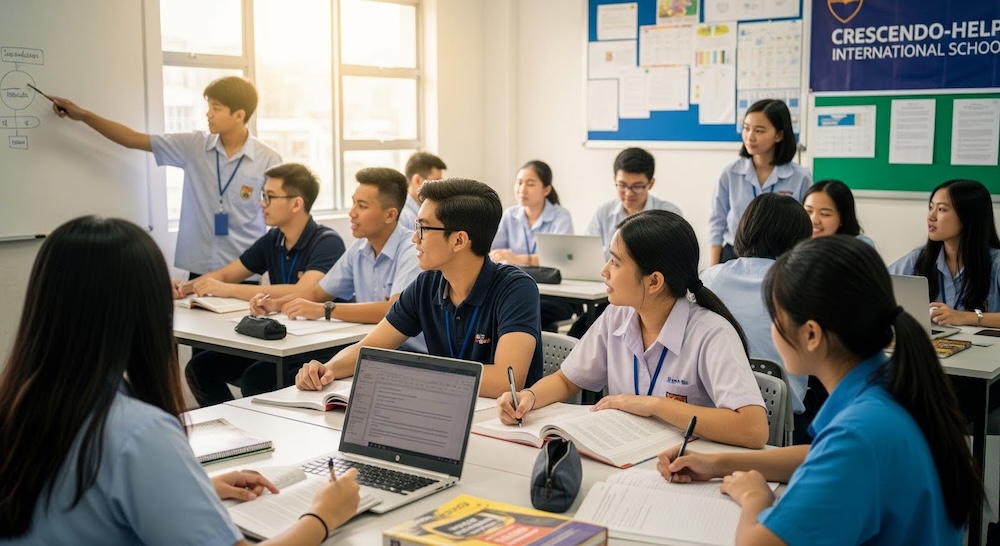
- International schools: Smaller classes (15–25 students). Emphasise project-based, student-centred learning. Teachers are often expatriates with specialised training in global curricula, supported by continuous professional development.
University Preparation and Outcomes
Public Schools- SPM and STPM qualifications allow entry into Malaysian universities
- Some overseas recognition, though often requiring bridging programmes
- IGCSE, A-Levels, IB, and AP are globally recognised
- Strong university counselling programmes
- Higher acceptance rates into Russell Group (UK), Ivy League (US), and Group of Eight (Australia) universities
What's the Learning Environment Like in International vs Public Schools?
Facilities and Learning Environment
Public Schools- Adequate but basic facilities
- Sports and co-curricular activities are offered, but funding is limited
- State-of-the-art facilities:
- STEM labs, robotics and technology integration
- Olympic-standard swimming pools and sports fields
- Performing arts theatres and creative studios
- Extensive extracurricular options: leadership clubs, Model UN, coding, sports academies
Admissions and Student Body Diversity
- Public schools: Predominantly Malaysian, fostering strong national identity and local cultural values
- International schools: Diverse, multicultural student body representing dozens of nationalities
Holistic Development Through Co-Curricular Excellence
Education extends far beyond classroom academics. International schools typically offer comprehensive programmes that public schools cannot match due to resource constraints: Public School Limitations:- Basic sports facilities and limited equipment
- Few extracurricular options due to budget constraints
- Minimal leadership development opportunities
- Limited exposure to creative arts and technology
- Leadership development: Student councils, house systems, peer mentoring programmes
- Creative arts: Drama, music, visual arts with professional-standard facilities and equipment
- Sports excellence: Swimming pools, modern sports complexes with qualified coaches
- Academic enrichment: Model UN, debate societies, science olympiads, coding clubs, robotics
The Multicultural Learning Advantage
International schools provide genuine cultural diversity that public schools cannot replicate:- Local integration: Malaysian students develop global perspectives whilst maintaining cultural identity
- International exposure: Students from various countries share different cultural viewpoints and experiences
- Language development: Natural English immersion environment with opportunities for additional languages
- Cultural competency: Essential skills for increasingly globalised university and career environments
Making the Right Choice for Your Family
How Can I Assess Whether International Schooling Suits My Child?
Ask these questions:- Does my child plan to pursue higher education in Malaysia, or abroad?
- Does my child thrive in exam-based systems (SPM/STPM) or coursework/project-based systems (IB, Cambridge)?
- Is English fluency and global cultural exposure a priority for their future?
- Am I prepared for the financial investment, including hidden costs?
When International Education Makes Sense
Consider international schooling if your family prioritises:- Global university pathways: Planning for UK, US, Australian, or other international universities
- English proficiency: Career aspirations requiring strong English communication skills
- Personalised attention: Your child thrives with individual support and smaller class environments
- Holistic development: Valuing character building alongside academic achievement
- Future flexibility: Keeping international relocation or career options open
Decision Framework
Ask yourself these key questions:- Academic Goals: Does your child show aptitude for curricula that emphasise critical thinking over memorisation?
- Financial Planning: Can your family invest in international education whilst maintaining financial stability?
- Long-term Vision: Where do you see your child in 10 years? University choice often determines career trajectory.
- Learning Style: Does your child thrive with personalised attention or perform well in large group settings?
Your Next Steps: Exploring CHIS
Both educational pathways offer valuable outcomes, but the choice depends on your family's priorities, financial capacity, and long-term aspirations. Public schools continue serving Malaysian families effectively, particularly those planning local university pathways. International schools provide global opportunities but require careful consideration of investment and fit. At CHIS, we bridge these worlds—delivering internationally recognised Cambridge education with Malaysian values, personalised attention with competitive pricing, and academic excellence with character development. Ready to Learn More?- Book a personalised school tour to experience our learning environment firsthand
- Schedule an admissions consultation to discuss your child's specific needs and our programmes
References
- Ministry of Education Malaysia, Education Blueprint 2013-2025, Annual Progress Report 2023
- TES, Cambridge International, Qualifications uptake hits all-time high (2024)
- The Edge Malaysia, Private Education Growth in Southern Malaysia (2024)