IGCSE vs GCSE: Complete Parent’s Guide to Choosing
October 10, 2025
Key Takeaways
- Global mobility advantage – IGCSE's international design allows seamless school transfers across 160+ countries, whilst GCSE remains UK-focused
- University recognition patterns – Both qualifications open doors equally, but international admissions officers show greater familiarity with IGCSE standards
- Assessment philosophy differences – GCSE incorporates mandatory coursework, whilst IGCSE focuses on examination excellence with optional practical components
- Malaysia’s advantage – IGCSE, equivalent to the UK-based GCSE, is the standard in international schools and globally recognised for A Level and university entry.
- A-Level preparation advantage – IGCSE's exam-focused approach provides a strong foundation for advanced study success
Introduction
Choosing between IGCSE (International General Certificate of Secondary Education) and GCSE (General Certificate of Secondary Education) could influence whether your child gains admission to Oxford, Harvard, or faces limitations in their university options. With global education competition increasing and families becoming increasingly mobile, this seemingly technical decision carries significant importance for Malaysian parents. Both are prestigious British qualifications, yet they differ fundamentally in design, recognition, and suitability for internationally minded families. Understanding these differences is crucial—especially when most Malaysian international schools offer IGCSE whilst UK schools predominantly use GCSE. This guide examines the real-world implications of each pathway, helping you make an informed choice based on your family's university targets and mobility plans. At Crescendo-HELP International School (CHIS), our Secondary Curriculum demonstrates how Cambridge IGCSE provides optimal preparation for both A-Level success and global university entry.What Is IGCSE?
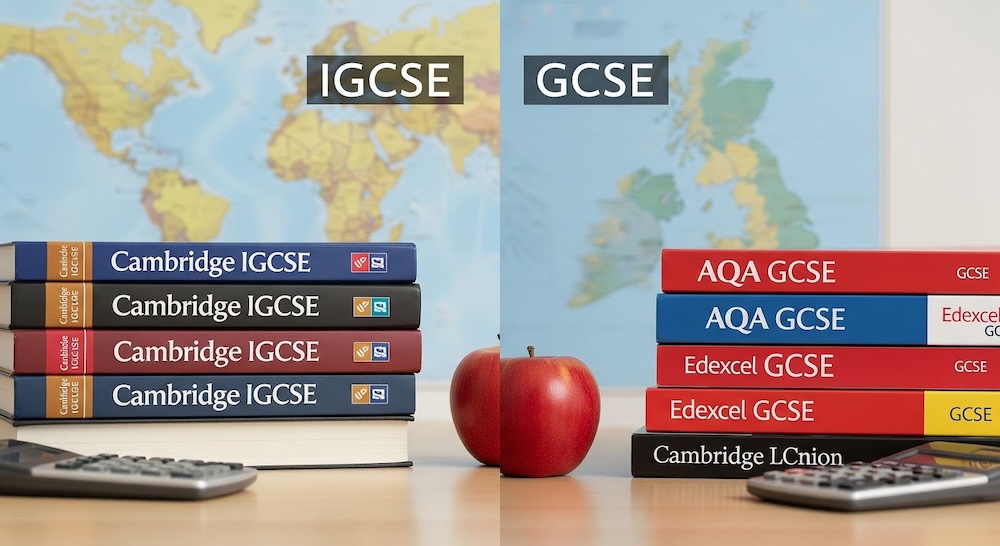
Think of IGCSE as the international version of GCSE—but here's what most parents don't realise: it wasn't just designed as GCSE's international cousin. IGCSE was built specifically to solve problems that GCSE couldn't handle for families moving between countries. IGCSE (International General Certificate of Secondary Education) serves students aged 14-16 across 160+ countries, offering:- Taken at ages 14–16 (Years 10–11)
- 70+ subject choices – from sciences to creative arts and global perspectives
- Grading: A–G or 9–1* (depending on board)
- Assessment: Exam-focused with optional coursework
- Built for global mobility and seamless school transfers
What Is GCSE?
GCSE is the UK's national school qualification, designed specifically for British students within the UK education system. GCSE (General Certificate of Secondary Education) remains Britain's standard qualification, featuring:- Taken in the UK at the end of Year 11
- Administered by UK boards: AQA, Edexcel, OCR
- 40+ subjects with mandatory English, Maths, and Sciences
- Grading: 9–1 scale (9 = top grade)
- Mix of exams + coursework required
Why International Schools Choose IGCSE (While UK Schools Use GCSE)
The choice between these qualifications often reflects institutional needs rather than academic superiority. UK schools use GCSE because it aligns with national curriculum requirements and university expectations. International schools favour IGCSE because it serves globally mobile families who need qualification portability.Assessment Philosophy: What This Means for Your Child
GCSE's Mixed Assessment:- Coursework provides ongoing achievement recognition
- Suits students who perform consistently rather than excelling under pressure
- Balances theoretical knowledge with practical application
- Develops strong revision and examination techniques
- Creates better preparation for A-Level assessment styles
- Rewards deep subject mastery over continuous assessment
IGCSE vs GCSE: Strategic Comparison for Parents
| Decision Factor | IGCSE Advantage | GCSE Advantage | University Impact |
|---|---|---|---|
| Global University Applications | Familiar to international admissions officers worldwide | Standard for UK university applications | Both accepted equally, but IGCSE offers broader recognition |
| Family Mobility Planning | Seamless transfers across 160+ countries | Limited to UK school system | IGCSE provides crucial flexibility for relocating families |
| Assessment Preference | Suits students who excel in examination environments | Better for students who prefer coursework balance | Both lead to equivalent university preparation |
| A-Level Progression | Consistent examination style provides smooth transition | Different assessment approach may require adjustment< | IGCSE students often show stronger A-Level adaptation |
| Subject Flexibility | 70+ subjects allow precise university prerequisite targeting | 40+ subjects with UK curriculum requirements/td> | IGCSE offers broader pathway options |
Is IGCSE Harder than GCSE?
Will IGCSE's difficulty level overwhelm my child? This question reflects genuine parental concerns about academic pressure and student wellbeing. The answer depends on your child's learning style and strengths. IGCSE's examination-focused approach can feel more challenging because success depends entirely on final performance rather than accumulated coursework marks. However, this intensity frequently provides strong A-Level preparation and university readiness. Subject-Specific Differences:- Mathematics: IGCSE Maths emphasises analytical thinking and problem-solving, often requiring deeper conceptual understanding
- Sciences: IGCSE incorporates more international contexts and practical applications
- Languages: IGCSE develops stronger written communication skills through examination practice
University Pathways: Do Universities Prefer IGCSE or GCSE?
Both qualifications enjoy equal recognition for university admission purposes. The deciding factors are achieved grades and subject selection rather than qualification type.UK University Recognition
Russell Group universities (Oxford, Cambridge, Imperial College London, UCL) accept both qualifications without preference. However, IGCSE students often show good A-Level performance due to examination preparation advantages, which can benefit competitive admissions.Global University Advantages
International universities increasingly encounter IGCSE applications, making admissions officers more familiar with grade equivalencies and academic standards. This familiarity can smooth application processes and eliminate potential confusion about qualification recognition.Malaysian University Access
Both qualifications provide equal access to Malaysian universities. However, students targeting international branch campuses (Monash, Nottingham, Curtin) may find slight advantages in IGCSE's global standardisation. At CHIS, our graduates consistently achieve outstanding university placements across the UK, Australia, Canada, and Malaysia, demonstrating IGCSE's effectiveness for diverse higher education pathways.How to Choose Between IGCSE and GCSE: Parent Decision Guide
First: Where Will Your Child Study?
Map your child's likely university destinations. If that map shows pins beyond the UK, IGCSE becomes essential for maintaining maximum flexibility and recognition.Second: How Mobile Is Your Family?
Expatriate families who choose locally-focused qualifications often face complications during unexpected relocations. IGCSE provides crucial insurance against changing circumstances.Third: What's Your Child's Learning Style?
Observe how your child handles examination pressure versus continuous assessment. Students who perform better in high-stakes situations often thrive with IGCSE's examination focus, whilst those preferring steady accumulation may benefit from GCSE's coursework integration.Common Mistakes Parents Make
Choosing Based on Perceived Difficulty
Difficulty shouldn't determine qualification choice. Both IGCSE and GCSE demand equivalent academic standards—they simply assess differently.Ignoring Long-term Flexibility
Many families underestimate how circumstances change. Career opportunities, family situations, and university preferences evolve. Choosing the more internationally portable option provides valuable insurance.Overlooking School Quality
The school delivering the qualification matters more than the qualification itself. Excellent teaching can make either pathway successful, whilst poor instruction undermines both.Your Next Steps: Making the Right Choice
For Malaysian families considering international education, IGCSE provides clear advantages through global recognition, examination preparation, and seamless A-Level progression. The qualification's international design aligns well with the mobile, globally connected families that international schools serve. However, the most important factor remains finding a school that delivers excellent teaching, pastoral care, and university preparation—regardless of qualification type. Ready to explore how CHIS transforms IGCSE education into university success? Our Cambridge-trained teachers, personalised attention, and proven track record demonstrate how the right school makes all the difference. Schedule a school tour to experience our approach to IGCSE excellence firsthand, or contact our admissions team to discuss your child's optimal pathway to university success. Related Guides for Parents:- IGCSE vs O Level: Which Opens More University Doors?
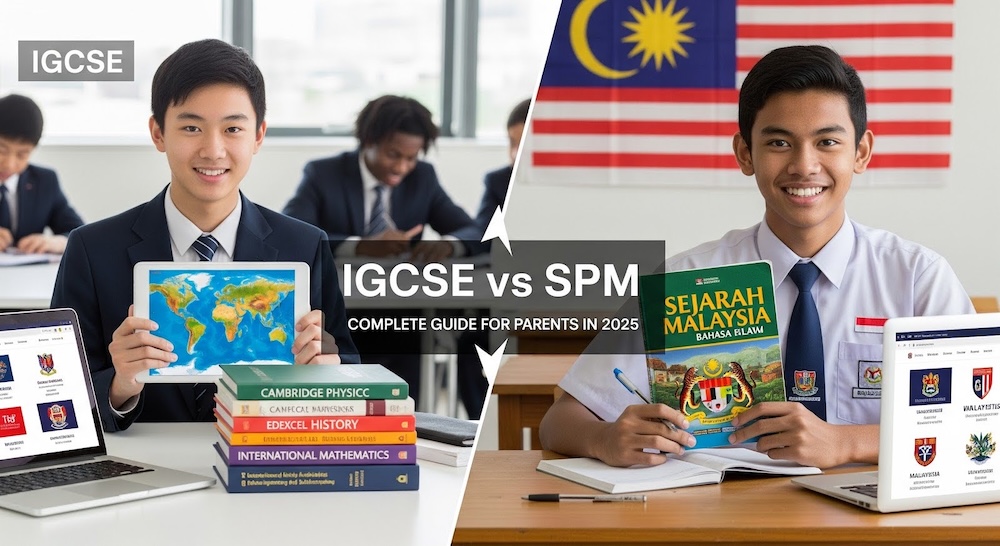
- IGCSE vs SPM: Complete Guide for Parents in 2025
- IGCSE vs A Levels: What’s the Next Step After IGCSE?