Key Takeaways
- Homeschooling offers flexibility, personalised pacing, and short-term adaptability, but requires strong parental commitment and long-term academic planning.
- Traditional schooling provides structured learning, certified assessments, and consistent social development within a peer environment.
- In Malaysia, homeschooling is permitted but largely unregulated, placing responsibility for curriculum quality and progression on families.
- Academic outcomes depend less on the setting itself and more on structure, continuity, and access to recognised qualifications.
- Socialisation, emotional development, and resilience are critical factors, particularly as children grow older.
- University recognition and subject alignment are clearer and more predictable through established school pathways.
- Many families who begin with homeschooling eventually transition into formal schooling at upper primary or secondary level.
Introduction
Choosing the right education pathway has always been a deeply personal decision. In 2026, Malaysian and expatriate families are increasingly weighing
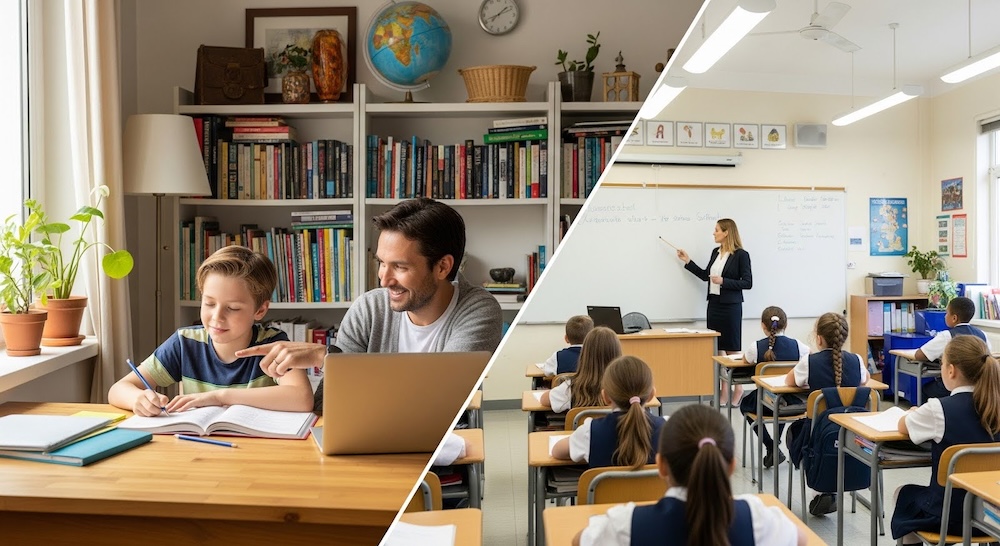
homeschooling vs traditional schooling as they look for learning environments that balance academic success, wellbeing, and future readiness.
Homeschooling gained global attention during the pandemic years, and for some families, it opened the door to alternative ways of learning. At the same time, traditional schools have evolved, offering more personalised learning, stronger pastoral care, and internationally recognised pathways.
This guide provides a
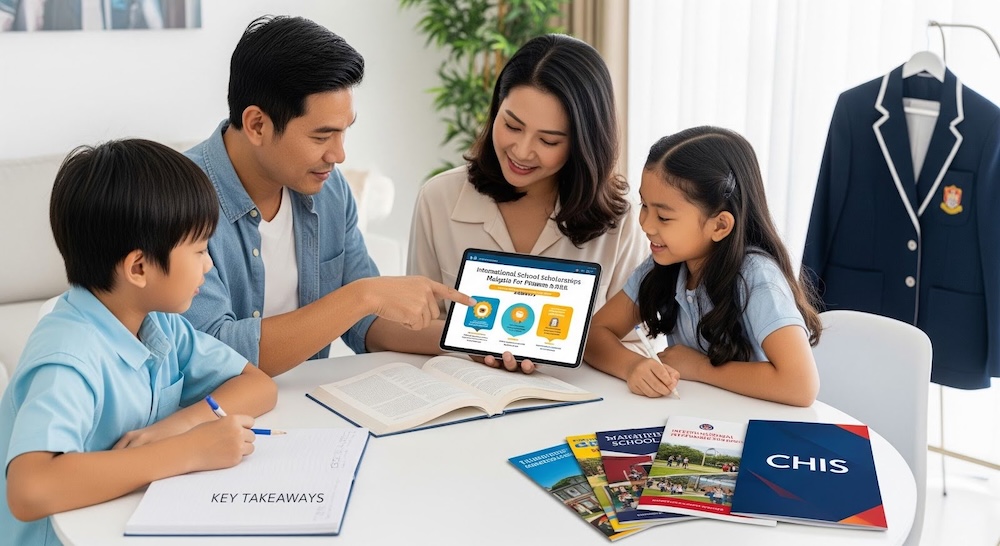
practical comparison to help parents decide which option best supports their child’s development—academically, socially, and long-term.
What Is the Difference Between Homeschooling and Traditional Schooling?
At its core, the difference lies in
structure, accountability, and learning environment.
How Homeschooling Works in Malaysia
Homeschooling in Malaysia typically involves:
- Parent-led or tutor-supported instruction at home
- Flexible schedules without fixed school hours
- Customised curricula chosen by parents
- Optional enrolment with international exam boards at later stages
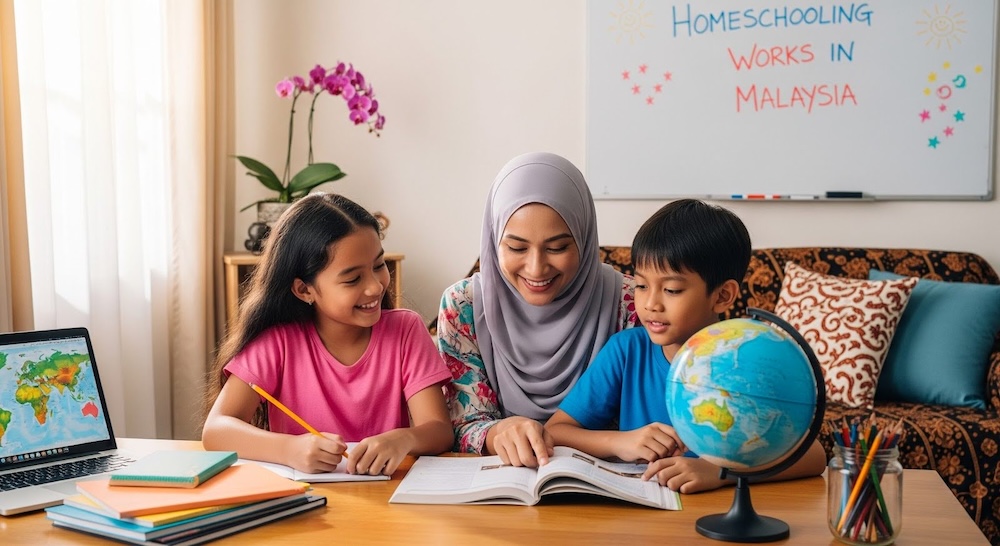
There is no central homeschooling authority. This means parents are responsible for curriculum design, academic progression, assessment planning, and eventual transitions into examinations or formal schooling.
For younger children, this flexibility can be appealing. However, as students move into upper primary and secondary years, the lack of standardised benchmarks can create uncertainty.
What Defines Traditional Schooling Today?
Modern traditional schooling—especially within international schools—has moved far beyond rigid classroom models. It typically includes:
- Fixed academic calendars and timetables
- Certified teachers and subject specialists
- Accredited curricula with clear progression stages
- Continuous assessment and recognised examinations
- Built-in peer interaction and co-curricular activities
Rather than limiting flexibility, structured schools increasingly aim to provide
guided consistency, ensuring students develop academically while being supported emotionally and socially.
Is Homeschooling Legal in Malaysia?
Yes, homeschooling is
permitted in Malaysia, but it is
not formally regulated under a national framework.
This has two key implications:
- Flexibility: Families can design learning experiences around their child’s needs.
- Responsibility: Parents must ensure academic quality, documentation, and future recognition—especially for secondary qualifications.
As children approach IGCSE, A-Level, or pre-university stages, many families find that navigating private registrations, subject requirements, and predicted grades becomes increasingly complex without institutional support.
Learn about how qualification choices affect university recognition in our guide:
IGCSE vs O Level: Which Opens More University Doors?
Academic Outcomes – Which Pathway Prepares Students Better?
Academic success depends on more than where learning takes place. It is shaped by
consistency, expertise, and progression clarity.
Academic Strengths of Homeschooling
Homeschooling can work well when:
- Children benefit from one-to-one attention
- Learning pace needs to be adjusted (accelerated or slower)
- Short-term circumstances require flexibility
- Parents have the time and expertise to support learning
For early primary years, this personalised approach can nurture curiosity and confidence.
Academic Advantages of Traditional Schooling
Traditional schooling offers advantages that become more significant over time:
- Structured progression aligned with global benchmarks
- Subject specialists at secondary level
- Regular assessments to identify gaps early
- Clear preparation for external examinations
The consistency of these systems reduces academic risk, particularly as subjects become more complex.
Academic Quick Comparison
| Aspect |
Homeschooling |
Traditional Schooling |
| Curriculum Structure |
Parent-designed |
Accredited & standardised |
| Assessment |
Optional / external |
Continuous & examinable |
| Subject Specialists |
Limited |
Yes |
| University Readiness |
Variable |
Clearly defined |
Socialisation and Emotional Development – A Key Parent Concern
One of the most common questions parents ask when comparing
homeschooling vs traditional schooling is:
What about social skills?
Common Socialisation Myths Around Homeschooling
Homeschooled children can socialise—but it requires intentional planning. Social interaction often depends on:
- Parent-organised activities
- Small peer groups
- External clubs or classes
While this can work, exposure is usually limited in diversity and frequency unless parents actively curate opportunities.
How Schools Support Social and Emotional Growth
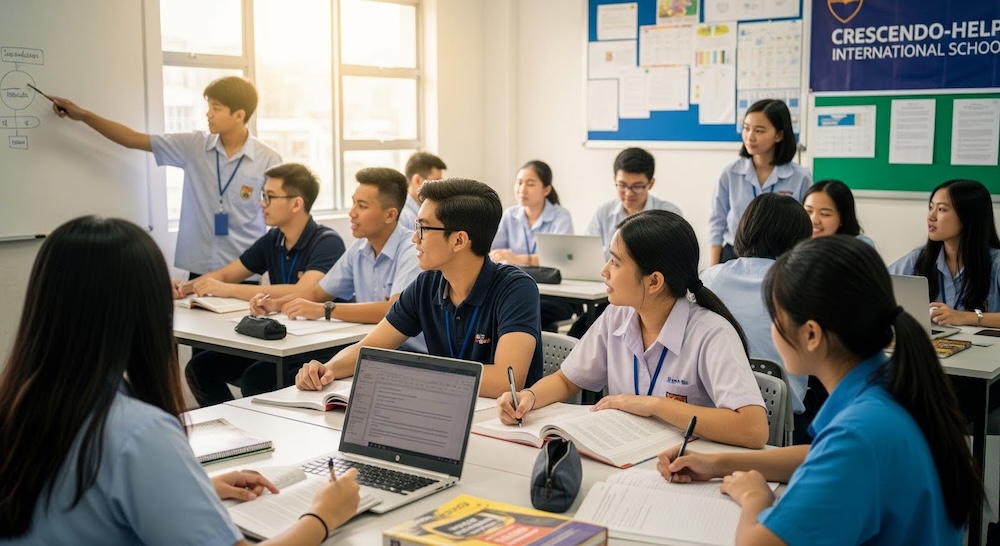
Schools provide
daily, structured social environments where children learn to:
- Communicate with peers from different backgrounds
- Collaborate and resolve conflicts
- Build emotional resilience and independence
- Develop leadership and teamwork skills
These experiences are difficult to replicate consistently outside a school setting.
At schools with strong pastoral care, emotional development is monitored just as closely as academic progress—helping students grow in confidence, empathy, and self-management.
See how Cresendo-HELP International School (CHIS) supports social and emotional development through its structured
Cambridge Primary programme.
Flexibility vs Structure – What Does Your Child Need?
Flexibility and structure are not opposites; they serve different purposes at different stages.
When Flexibility Helps
Homeschooling flexibility may suit families who:
- Travel frequently or relocate often
- Need temporary learning adjustments
- Are managing short-term personal circumstances
In these cases, homeschooling can act as a bridge, not necessarily a long-term solution.
When Structure Matters More
As children grow older, structure becomes increasingly important for:
- Developing study discipline
- Managing subject workloads
- Preparing for examinations
- Planning university pathways
Without structure, students may struggle when transitioning into high-stakes academic environments later on.
University Recognition and Long-Term Pathways
This is often the deciding factor for many families.
Challenges Homeschoolers Face at Secondary Level
Homeschooled students aiming for IGCSE or A-Levels often encounter:
- Difficulty registering as private candidates
- Limited access to predicted grades and academic references
- Lack of exam technique training
- Increased pressure during exam years
These challenges do not mean homeschooling cannot lead to university—but they increase risk and complexity.
Why Traditional School Pathways Offer Clarity
Schools that deliver recognised international curricula provide families with a clearer and more predictable academic pathway, particularly as students progress towards upper secondary and pre-university levels. These schools typically offer:
- Seamless progression from primary to secondary and pre-university stages
- Qualifications recognised by universities worldwide, reducing uncertainty during applications
- Dedicated university guidance, including subject planning and application support
- Structured subject selection aligned with long-term academic and career goals
This level of clarity becomes especially important for families considering overseas universities or competitive programmes, where academic continuity and recognised qualifications play a critical role.
This approach aligns with wider research showing that families increasingly prioritise internationally recognised school pathways and clear progression routes when making schooling decisions for future mobility and university access (British Council, Local Impact of Transnational Education, 2021, section on international pathways and school choice).
See how CHIS supports clear academic progression through its structured Cambridge Secondary programme.
Why Many Homeschooling Families Eventually Choose Formal Schooling
It is increasingly common for families to start with homeschooling and later transition into traditional schooling.
Common reasons include:
- Need for standardised assessments
- Desire for peer learning environments
- University application requirements
- Subject specialisation at secondary level
Parents often find that structured schooling provides reassurance during critical academic years.
Related reading for parents exploring broader options:
Homeschooling vs Traditional Schooling – Which Is Better in 2026?
There is no universal answer. The better option depends on your child, your family, and your long-term goals.
A Practical Decision Framework for Parents
Ask yourself:
- How old is my child, and how independent are they as a learner?
- Do we have the time and expertise to sustain homeschooling long-term?
- Are internationally recognised qualifications important for our child’s future?
- How important are peer interaction and structured support?
Homeschooling vs Traditional Schooling: Key Differences at a Glance (2026)
| Aspect Category |
Aspect |
Homeschooling |
Traditional Schooling |
| Learning Structure & Environment |
Learning structure |
Flexible, parent-designed schedule |
Structured timetable with defined school hours |
| Curriculum oversight |
Chosen and managed by parents |
Accredited, school-delivered curriculum |
| Learning environment |
Home-based |
Purpose-built school facilities |
| Teaching expertise |
Parents or private tutors |
Certified teachers and subject specialists |
| Class size & attention |
One-to-one or small groups |
Small to moderate class sizes with guided attention |
| Academic Outcomes & Progression |
Academic progression |
Varies by family planning |
Clear progression from primary to secondary to pre-university |
| Assessment & feedback |
Informal or externally arranged |
Continuous assessment with formal feedback |
| Exam preparation |
Parent-led, private registration |
School-supported preparation for IGCSE / A-Levels |
| Qualification recognition |
Depends on exam route taken |
Internationally recognised qualifications |
| Subject selection |
Flexible but limited at higher levels |
Structured selection aligned with career pathways |
| University Readiness & Pathways |
University guidance |
Parent-led or external |
Dedicated university counselling and guidance |
| Academic references |
Limited or private |
School-provided |
| Overseas university readiness |
Variable |
Clearly structured and recognised |
| Socialisation & Emotional Development |
Peer interaction |
Planned and limited by context |
Daily interaction with diverse peer groups |
| Emotional support |
Dependent on family support |
Embedded pastoral care systems |
| Social skills development |
Requires intentional planning |
Naturally developed through daily school life |
| Co-Curricular & Holistic Development |
Co-curricular activities |
Optional, externally arranged |
Integrated sports, arts, leadership programmes |
| Leadership opportunities |
Limited, informal |
Structured leadership and teamwork roles |
| Flexibility & Family Commitment |
Schedule flexibility |
High |
Moderate, structured |
| Parental involvement |
Very high, long-term commitment |
Supportive but not instructional |
| Suitability & Long-Term Clarity |
Suitability by age |
More common in early years |
Stronger fit from upper primary onwards |
| Transition to formal exams |
Can be complex |
Seamless and guided |
| Long-term clarity |
Depends on family planning |
Predictable academic and university pathways |
How Cresendo-HELP International School Supports Families Exploring Alternatives to Homeschooling
CHIS works with families who:
- Are transitioning from homeschooling into formal education
- Want smaller classes and personalised attention
- Prefer a structured yet supportive learning environment
Key strengths include:
- Small class sizes that preserve individual attention
- Cambridge-aligned progression with clear outcomes
- Strong pastoral care supporting emotional and academic adjustment
- Balanced expectations that help students reintegrate confidently
Rather than choosing between flexibility and structure, many families find value in an environment that thoughtfully combines both.
Explore
Cambridge Primary pathways designed for long-term clarity.
Final Thoughts
The debate around
homeschooling vs traditional schooling is less about choosing the “right” system and more about choosing the
right pathway at the right time.
Homeschooling can offer valuable flexibility and personalisation, particularly in early years or during transitional periods. However, as academic demands increase and future planning becomes critical, structured schooling provides stability, recognition, and support that many families value.
For parents seeking a balanced approach—one that combines personal attention with clear academic direction—schools offering internationally recognised curricula and strong pastoral care often provide the confidence families are looking for.
Next Steps: Understand Structured Pathways at CHIS
- Cambridge Primary : Small classes and personalised learning that support confident transitions
- Cambridge Secondary : Clear academic progression towards IGCSE, A-Levels, and university pathways
This approach allows families to balance flexibility with long-term academic clarity as their child’s needs evolve.
Talk to us today to learn more about how CHIS supports students transitioning from homeschooling, or
book a personalised school tour to experience our learning environment firsthand.
Frequently Asked Questions
Is homeschooling better than traditional schooling in Malaysia?
Neither option is universally better. Homeschooling can work well short-term, especially in early years, while traditional schooling offers clearer academic progression and social development over the long term.
Can homeschooled students sit for IGCSE or A Levels?
Yes, but they must register as private candidates and manage preparation independently. This can be challenging without access to teachers, mock exams, and academic references.
Can a homeschooled child enrol at CHIS?
Yes.
CHIS assesses each child individually and supports smooth academic and social transitions into its Cambridge programmes.
Talk to us to learn how we help homeschooled students integrate confidently into structured learning pathways.
Does CHIS support flexible learning needs?
CHIS offers structured flexibility through small classes, personalised teaching, and strong pastoral care—often appealing to families transitioning from homeschooling. Learn more about us –
Book a visit to CHIS today.
Final Thoughts
The debate around
homeschooling vs traditional schooling is less about choosing the “right” system and more about choosing the
right pathway at the right time.
Homeschooling can offer valuable flexibility and personalisation, particularly in early years or during transitional periods. However, as academic demands increase and future planning becomes critical, structured schooling provides stability, recognition, and support that many families value.
For parents seeking a balanced approach—one that combines personal attention with clear academic direction—schools offering internationally recognised curricula and strong pastoral care often provide the confidence families are looking for.
Reference:
British Council,
Local Impact of Transnational Education (2021), section on international pathways and school choice.
https://www.britishcouncil.org/sites/default/files/bc_tne_report_final_120421.pdf